Who Wants to Wait?
A guest essay by Lindsey Crittenden, the author of The Water Will Hold You; A Skeptic Learns to Pray (Harmony Books, 2007) and numerous published essays, articles, and stories. She lives in San Francisco, where she teaches writing and is an active member of All Saints' Episcopal Church. Visit her online at www.lindseycrittenden.com
For Sunday December 23, 2007
Fourth Sunday in Advent
Lectionary Readings (Revised Common Lectionary, Year A)
Isaiah 7:10–16
Psalm 80:1–7, 17–19
Romans 1:1–7
Matthew 1:18–25
When I was six years old, we moved from a small house on a street full of children and bicycles to a bigger house up the hill. Our new neighbors consisted of retired navy Admirals and old ladies who wore faded housecoats to check their mail every afternoon. This was supposed to be a move up?!?
And then I met Karen. Karen was my age and she lived only four houses away. We bonded instantly. She was a tomboy who climbed trees and rode horses. (When we were ten, she fell from a cliff near our houses — fell onto the rocks and broke her back. She stayed put in a body cast in her parents’ living room for a few months, and then she was upright again, mobile and daredevilish as always.) I was shy and timid and loved to read books. We were inseparable, yin to the other’s yang. We listened to Peter Paul and Mary and played with plastic horses and drew murals and taped fortunes with dirty words onto plain fortune cookies we then sold from a card table to unsuspecting neighbors.
When her parents split, she and her mother moved away. Now Karen came to town every few months to see her father — and to stop by to see us. One year, she was coming to visit on a Tuesday. I woke that morning knowing “today Karen is coming!” The school day passed in a blur, waiting for four o’clock, when Karen and her dad would arrive. Tuesday was the day of my weekly piano lesson, at the house of my teacher who lived about a mile from school. Usually I walked home, taking my time as long as I got home by dinner, but that Tuesday, my mother would pick me up in time for Karen’s visit.
I don’t remember the lesson. I don’t remember my mother picking me up. I don’t remember Karen’s arrival, or what we did when she arrived. What I remember is the waiting: the delicious tingle of anticipation as I walked through Mr. MacFarland’s yard to his house, where the side-by-side pianos waited: After the lesson, I’d see Karen. I remember the bay trees growing on either side of the walkway, the slight incline of a pebbled path up to his back door, the wall of windows overlooking the trees and hidden from the street below. I noticed those things with intense awareness: the splotching of shadow at my feet; the way the fragrance of the bay trees was stronger at the bend in the path than on the straightaway. It was a path I walked every week, but I was noticing it for the first time.
It’s been several years since I’ve seen Karen, and when I think of her I remember different episodes: the corner of her parents’ living room where she lay, as cheerful as ever, in a hospital bed; the shelves in her bedroom where she kept her plastic horses; the turntable on which we played “Lemon Tree” and “Puff the Magic Dragon” over and over. I recall our long confidences once we became teenagers, about the boys we kissed and the boys we wanted to kiss. But, no matter which detail I latch on, all of them are suffused with the power of that three-minute walk up Mr. MacFarland’s path, that power of waiting.
This year, I spent the second week of Advent in silence at The Bishop’s Ranch, a retreat center of the Episcopal Diocese of California, in Healdsburg. There, in the slumbering beauty of Sonoma County vineyards in December, where the fog hugs the Russian River in the morning and where overnight frost delineates each vein on the fallen oak leaves, I thought a lot about waiting. My first few days, I found myself waiting for the bell to ring for breakfast; waiting for the bell to ring for lunch; waiting for dusk, my favorite time of day to go for a long walk on the ranch grounds. And then as my body settled into the silence and began to notice the slant of light through the redwoods, the rustle of the birds in the hedge outside the window, the taste of the communion wine every day at 11:30 eucharist, I stopped molding my present around future events. That is, I started living in the moment — unplanned. I got up for no particular reason and walked I didn’t know where. I was still waiting, but I was resting in the waiting — enjoying it as palpably as I had enjoyed it that Tuesday afternoon when I was twelve.
This seemed a particular joy, a seeming paradox the church has chosen to commemorate in a separate liturgical season. Adventus means “coming” in Latin, and the propers for it are all about anticipation: A voice cries, In the wilderness prepare a way, Make a straight path, the Lion shall lie down with the lamb, and a little child shall lead them. This Sunday — Advent 4 — we get the payoff, or rather in 2 days we do, when we celebrate Christmas.
For this Sunday, we see in the gospel reading, Matthew’s interest in proving Jesus as the fulfillment of scripture. Throughout the 28 chapters of his gospel, Matthew reminds us again and again how the baby born in Bethlehem is the son of David, the son of Abraham. He tells us, again and again, how such and such happened to fulfill scripture. At the beginning of Matthew, we have genealogy: Fourteen generations from Abraham to David, fourteen from David to the exile in Babylon, fourteen from Babylon to the Messiah. Lots of waiting.
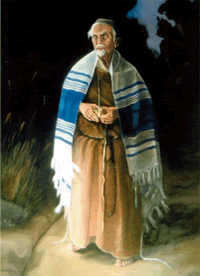 |
The Assumption of Joseph by Carol L. Douglas. |
And then verse 18: “now the birth of Jesus the Messiah took place in this way.” We can hear an editorial edge, a need to explain how it took place “in this way.” Don’t births all take place in basically the same way? But this isn’t any birth, this wasn’t any conception. Matthew goes on to tell of an announcement by an angel of the Lord: not the annunciation to Mary, so beautifully told in Luke’s gospel, but the tale told to Joseph, just as that good man has resolved to “dismiss Mary quietly.” What else might he do when his fiance finds herself with child? He is a righteous man.
The story — the 42 generations — gets interesting now. It’s not just a list of names, sprinkled a few times with those of women (and not just any women, but Rahab, Ruth, Tamar, and Mary, women of “scandalous or unusual sexual union,” as one text puts it* — that is, a prostitute-turned-spy, a foreigner, a rape victim, an unwed pregnant teen).
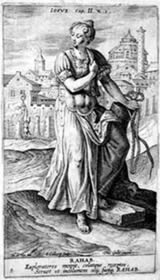 |
Rahab of Jericho. |
It’s a story now, a fascinating one, a human one. An unmarried, unwed maiden; a betrothed man; and an angel who appears and tells him to do right by her. “All this took place to fulfill what had been spoken by the Lord through the prophet:
"Look, the virgin shall conceive
And bear a son,
And they shall name him
Emmanuel.”
He did right by her. And that had to be in some ways as terrifying, as trusting, as transformative, as Mary’s acceptance of the message given to her. Who knows what angels will say, and when and how? Who knows how we will respond? Can we do so with love and openness of heart?
Growing up, I didn’t know that Advent was its own season. I thought it was nothing more than the kind of calendar my mother would prop on the kitchen counter for my brother and me. The size of a small poster, the Advent calendar (a tradition started by German Lutherans, my mother’s heritage, and now morphed into kitschy quilted stockings and interactive websites) had printed on it a stock wintery scene — snow, sleighs, starlight, frolicking children — and scored squares for each day up to 24. Every December morning, my brother and I pushed aside our cereal bowls to find the square corresponding to the date, and took turns folding it back to reveal the scene beneath. And there it was, fun to find but always a bit disappointing: a toboggan, a cup of cider, a boy frolicking with a dog. And then, under 24, the largest square of all: the scene to best all the others. The mother, the man, the babe, all glowing in the warm yellow light of the manger.
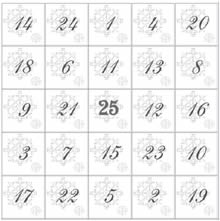 |
That was it. 24 squares. I didn’t understand — didn’t the month of December have 31 days? My mother explained to me, but I continued to feel cheated, somehow. As much as I loved Christmas eve as a girl — that was the night the family gathered at our house — I felt a letdown when it was over. The tattered wrapping paper underfoot, the brand-new gifts already lost their lustre, my brother and I would look at each other over the Christmas breakfast table (the one day of the year we were allowed to eat in the living room, danish pastries on the couch). We knew: It was over. The next thing would be putting on scratchy dress-up clothes and getting in the car to drive over to our grandfather’s for Christmas. The gifts had all been given: all that was left was the tedious dinner at which my aunt drank too much, my father grumbled under his breath, my grandfather got weepy singing “Stille Nacht,” and my brother and I slunk off to the den to watch TV.
 |
Advent wreath. |
As an adult, I’ve chosen to observe Advent as four distinct weeks. I try to ignore the lights everywhere (as pretty as they are) and wait until the 23rd to buy my tree. I keep an Advent wreath on the dining room table, and light the candles every night. Once the 24th arrives, out come the ornaments and the baubles and the Christmas songs — and up they stay for all twelve days.
Christmas day can still feel heavy with sadness, especially the past ten years as my family has gone from an extended group of 16 to a small core of 4. For many in our society, this season with its imposed good cheer and parties and consumerism can be a time of despair — and I understand that now more than I ever have. I’ve experienced a lot of loss, and old traditions have died along with the people who installed them. And Jesus, despite the babies in the crèches and the joyful carols, can seem no more immediate than he did the day before. And as for Peace on earth, Goodwill to men … well, it’s not here yet, either.
What can we do to bring it closer? To bring him closer? What can I do, right here, right now?
We’re still waiting, but that doesn’t let us off the hook. That doesn’t mean we give up.
Waiting is more than a recipe for letdown, a puritanical message of self-denial (“if you really want it, you’ll still want it in six months,” my mother used to say when I begged for some new toy in June). It’s not an invitation to passivity (“I don’t need to do a thing,” we all too easily can think as we walk by the mess or the person with outstretched hand, “someone else will take care of it”). Waiting can be both delicious and austere, a pleasure and a gift. In it, we live and we love. It’s how we wait that matters — in anticipation, with thanks, and in love.
Amen.
* From Education for Ministry text, year two, copyright 1977, fourth edition revised 2000. The University of the South.
Image Credits: (1) The Assumption of Joseph, Carol L. Douglas, http://www.goaway-letmepaint.com; (2) Image of Rahab, one of the four women mentioned in Matthew’s genealogy proving Jesus as son of David, http://en.wikipedia.org/wiki/Rahab; (3) Link to online Advent calendar, http://www.woodlands-junior.kent.sch.uk/customs/Xmas/calendar/; and (4) Image of Advent wreath, http://en.wikipedia.org/wiki/Advent.